

Indianapolis car accident representation
Car Wreck Lawyer Indianapolis
After a crash, you need someone who can take over the insurance fight, document your injuries, and push for fair compensation while you focus on getting better.
Help after an Indianapolis car accident
A serious wreck can turn into a second problem fast: adjusters want a statement, bills start arriving, your vehicle is in limbo, and your symptoms do not fit neatly into an email thread. If you are searching for a car wreck lawyer Indianapolis drivers can rely on, the goal is simple: protect your claim early, prove what the crash cost you, and prevent an insurance company from setting the narrative.
Our team at Indiana Truck Accident Lawyer handles auto injury claims across Indiana, including Indianapolis and surrounding communities. We step in to manage the claim process, gather the records that matter, and present damages in a way an insurer—or a jury, if needed—has to take seriously. As part of that work, Indiana’s trusted truck accident lawyer team builds cases around evidence, not assumptions, so your recovery is not left to quick settlement math.
If you are hurt, start by getting medical care and preserving information: photos of the vehicles and scene, witness names, the other driver’s insurance details, and the crash report number if you have it. Then talk with a lawyer before giving a recorded statement or signing any release. Those early steps often decide how strong the claim will be later.
What an auto accident attorney in Indianapolis actually does
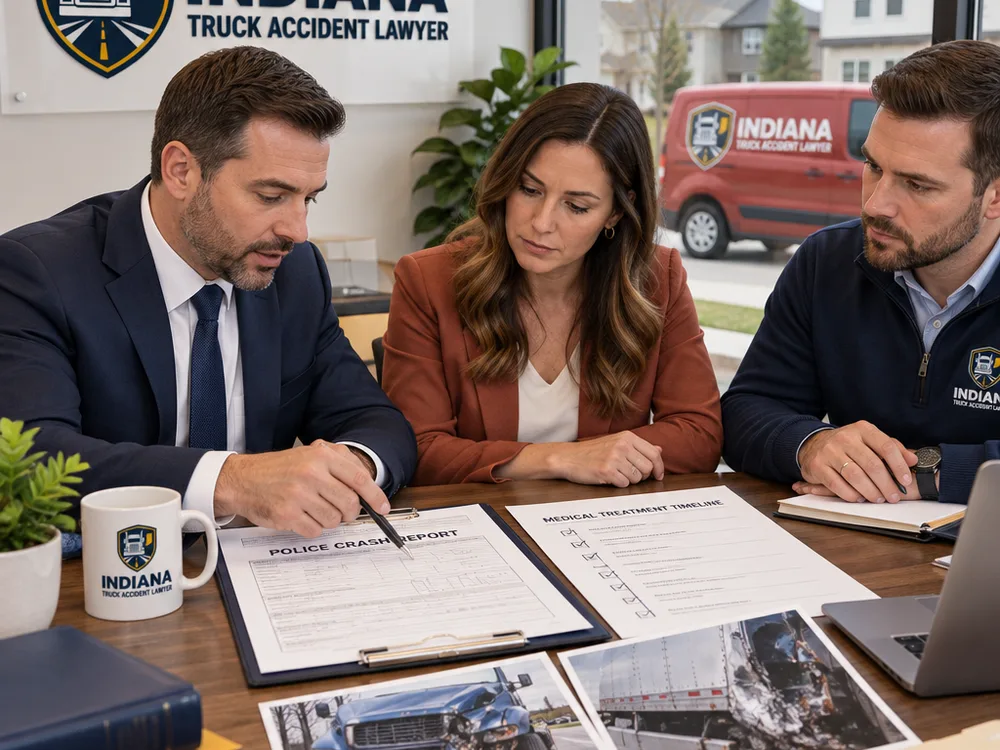
A car accident claim is not just paperwork. It is a timeline, a set of medical facts, and a liability story that has to hold up when an adjuster challenges it. As your Indianapolis auto accident counsel, we typically handle:
- Evidence collection: photos and video, vehicle damage documentation, witness statements, and the official crash report.
- Claim strategy: deciding what information to share early, what to verify first, and how to avoid gaps insurers use to argue your injuries are unrelated.
- Medical documentation: organizing ER records, imaging, follow-up care, physical therapy notes, and physician opinions on restrictions and future care.
- Wage loss and work impact: proving time missed, reduced duties, and lost earning capacity when injuries affect your job.
- Damage valuation: medical bills, future treatment, pain and limitations, and property loss.
- Negotiation and litigation: demand packages, settlement negotiation, and filing suit when the insurer will not act reasonably.
In Indianapolis, a lot of crashes involve fast-moving corridors where liability disputes are common: I-465, I-70, I-65, and busy arterials like Keystone Avenue or 38th Street. Chain-reaction collisions and lane-change impacts often lead to arguments about who started the sequence. Building a clear timeline early makes those arguments easier to defeat.
Common car wreck injuries and claim challenges
Whiplash and soft-tissue injuries
Insurers often downplay these because X-rays can look normal. Consistent treatment, documented range-of-motion limits, and therapy notes can make the difference.
Back and neck injuries
Herniations and nerve symptoms are frequently disputed. We focus on imaging, specialist records, and the progression of symptoms after the collision.
Concussion and head injury symptoms
Head injuries can show up as headaches, dizziness, sleep changes, and concentration problems. A documented timeline and appropriate referrals help connect symptoms to the crash.
Fractures and surgical cases
These cases often involve higher bills and longer recovery. We document future care needs and the day-to-day limitations that do not show up on an invoice.
Disputed fault
When the other driver blames you, we look for independent proof: third-party witnesses, roadway camera footage when available, and physical damage patterns.
Pressure to settle early
Quick offers often arrive before you know your diagnosis or recovery timeline. We push settlement discussions to match the medical reality of your case.
Local jurisdiction context
Where we handle Indiana car accident cases around Indianapolis
We help injured drivers and passengers across Indianapolis and nearby areas, and we tailor the approach to how crashes and claims tend to play out locally.
- Downtown Indianapolis and Mile Square: dense traffic, complicated intersections, and rideshare pickups can create multi-party disputes and conflicting statements.
- Broad Ripple and Meridian-Kessler: high pedestrian activity and heavy evening traffic mean injury cases may involve crosswalk and visibility arguments.
- Castleton and the I-465/Keystone corridor: frequent congestion increases rear-end and merge-related collisions, where insurers may claim your injuries are “minor” despite clear vehicle damage.
- Greenwood and the south side commuting routes: higher-speed impacts on commuter corridors often mean longer treatment and more time off work.
The essentials stay the same
No matter where the wreck happens, preserve evidence, confirm insurance coverage, document treatment, and present damages in a complete and accurate way. That is what an Indianapolis car accident lawyer should be doing from the first days, not months later when evidence is harder to retrieve.
The claim process
How a car accident attorney in Indianapolis can move your case forward
-
01
Intake and immediate triage
We map out what happened, identify urgent issues—medical care, rental or vehicle access, and recorded statements—and set a plan for the first 2 to 3 weeks.
-
02
Investigation and documentation
We gather the crash report, photos, witness information, and available footage. We also start a treatment timeline so the record stays consistent.
-
03
Insurance coverage and liability analysis
We review the at-fault coverage, any applicable medical payments coverage, and liability defenses the insurer is likely to raise based on the roadway and collision type.
-
04
Damages build-out
We collect medical records and bills, document work impact, and compile proof of symptoms and restrictions over time, not just the first ER visit.
-
05
Demand and negotiation
When your medical picture is clear enough to value the claim, we send a demand package with supporting evidence and negotiate from a documented position.
-
06
Lawsuit if the insurer will not be fair
If settlement talks stall, we prepare for litigation: pleadings, discovery, depositions, expert review when needed, and trial readiness.
Client perspectives
Clear guidance when the insurance process feels overwhelming
“After my crash the adjuster kept asking for a recorded statement and a blanket medical release. Once my lawyer took over, I stopped getting pressured, my treatment records were organized, and the settlement talks finally made sense.”
“They explained what mattered and what did not, and they were honest about the timeline. Having someone deal with the insurance company while I was in therapy was a huge relief.”
“I had a gap in care because I could not get an appointment right away, and the insurer tried to use that against me. My attorney helped document everything and kept the focus on the facts.”
If you were hurt in a crash, the best time to protect your claim is before you give statements, accept a quick offer, or sign paperwork you have not had reviewed.
Call for a Free ConsultationPractical answers
Indianapolis, Indiana, car accident lawyer: questions people ask before hiring
Should I talk to an Indianapolis car accident lawyer before giving a recorded statement? +
Yes, in most injury cases it is smart to get legal advice before giving a recorded statement because insurers use those recordings to lock in a version of events early. You can still report the basics of the crash, but a lawyer can help you avoid guessing about speeds, distances, or how you feel medically before you have been evaluated.
What if the other driver says I caused the wreck? +
You can still pursue a claim, but you need independent proof that supports your account of the collision. A car wreck lawyer in Indianapolis will look for the crash report, third-party witnesses, photos of vehicle damage angles, and any available video, then build a timeline that explains why the other driver’s version does not fit the physical evidence.
How long do I have to file a car accident lawsuit in Indiana? +
In Indiana, the general statute of limitations for personal injury claims is two years, and missing that deadline can end the case. There are exceptions and special rules in some situations, so it is worth getting guidance early while records and witnesses are still available.
What compensation can an Indiana auto accident attorney pursue? +
A claim can include medical expenses, future treatment costs, lost wages, reduced earning ability, and pain and suffering related to the injuries. The value depends on documentation: the diagnosis, treatment course, prognosis, and how the injury affects your day-to-day life and work.
What if I did not go to the ER the same day? +
You may still have a valid injury claim, but delays in treatment give insurers room to argue your symptoms came from something else. If you did not go immediately, get evaluated as soon as you can and be clear with the provider about when symptoms started and how they changed after the crash.
Do I need an attorney if the insurance company already offered a settlement? +
Often, yes, because early offers usually arrive before the full medical picture is known and before wage loss and future care are documented. A car accident attorney in Indianapolis can compare the offer against your medical records, billing, time off work, and likely future treatment before you give up your right to pursue more.
What should I bring to my first meeting with a car accident lawyer in Indianapolis, Indiana? +
Bring the crash report number if you have it, photos of the scene and vehicles, insurance information, any letters or emails from insurers, and a list of medical providers you have seen. If you have pay stubs or a note from work showing missed time or restrictions, that helps document wage loss early.
Free consultation
Talk with an Indianapolis car wreck lawyer about next steps
Share what happened, what treatment you have had so far, and what the insurance company is asking for. We will explain what matters, what can wait, and how to protect your claim while you recover.
Call for a Free Consultation